If you’ve owned or managed a commercial building in New Jersey over the last decade, you’ve likely noticed one roofing system showing up again and again: TPO. Warehouses, office buildings, retail centers, schools, and medical facilities across the state continue to choose it—and that dominance isn’t accidental.
TPO roofing has earned its place by solving many of the problems that NJ commercial buildings consistently face: rising energy costs, demanding weather conditions, large roof surfaces, and the need for long-term reliability without excessive maintenance.
But while TPO is popular, it’s also one of the most misunderstood roofing systems. When installed correctly, it performs exceptionally well. When shortcuts are taken, it can fail early. Understanding why TPO works—and what makes it fail—is key for any NJ commercial decision-maker.
What Makes TPO So Well-Suited for NJ Commercial Buildings
New Jersey’s climate is demanding. Hot summers, cold winters, freeze-thaw cycles, heavy rain, and snow all stress roofing systems in different ways. TPO handles this combination better than many alternatives because of how it’s engineered.
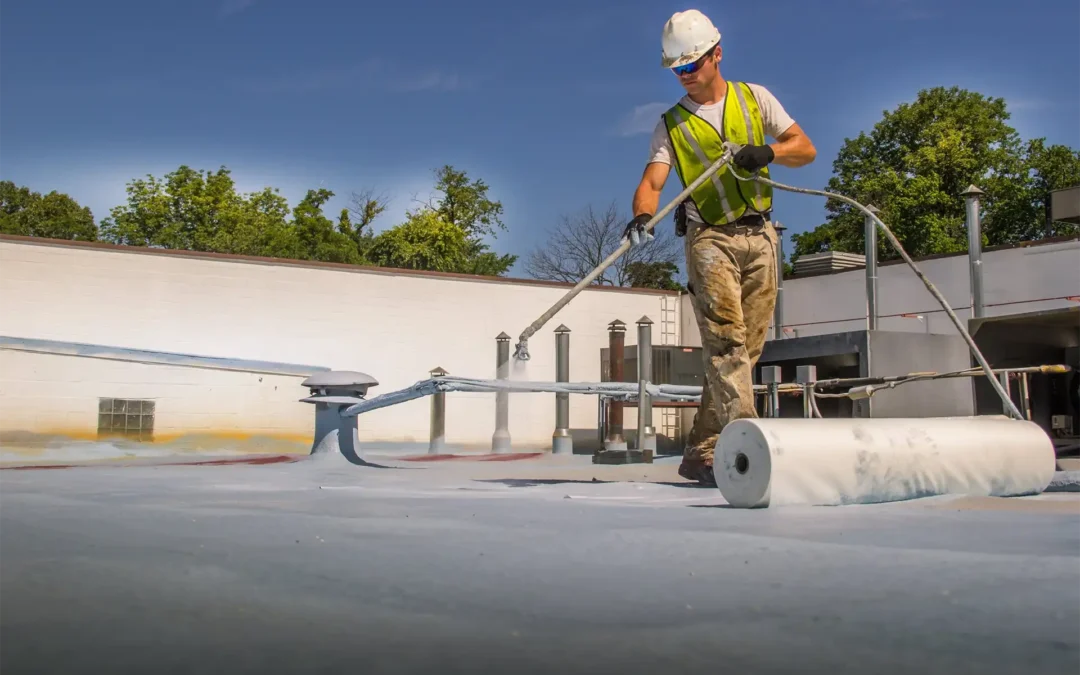
TPO membranes are thermoplastic, meaning seams are heat-welded rather than glued. When welded properly, seams become a single continuous membrane instead of a bonded joint. This dramatically reduces the risk of seam separation, which is one of the most common failure points on flat roofs.
The bright white surface reflects UV radiation, lowering rooftop temperatures and reducing heat transfer into the building. For large commercial roofs, this can significantly reduce cooling loads during peak summer months.
Why TPO Is Often the Best Value per Square Foot
Commercial roofing decisions aren’t just about performance—they’re about scale. Many NJ buildings have tens or hundreds of thousands of square feet of roof area.
TPO offers:
- Competitive material costs
- Faster installation compared to multi-layer systems
- Lightweight construction that reduces structural load
- Compatibility with insulation upgrades
- Lower long-term energy costs
For large buildings, even small per-square-foot savings add up quickly.
The Role of Insulation in TPO Performance
One reason TPO performs so well in NJ is its compatibility with modern insulation systems. When paired with proper insulation thickness and tapered layouts, TPO roofs:
- Reduce thermal bridging
- Improve interior comfort
- Minimize ponding water
- Extend membrane lifespan
A TPO membrane installed over inadequate or wet insulation will never perform as intended. Insulation design is just as important as membrane choice.
Where TPO Performs Best
TPO shines in environments where roofs are large, relatively simple, and exposed to high sun loads.
Common applications include:
- Distribution centers and warehouses
- Retail plazas
- Office parks
- Educational facilities
- Healthcare buildings
In these settings, the combination of reflectivity, welded seams, and cost efficiency delivers consistent results.
Where TPO Can Run Into Trouble
Despite its strengths, TPO is not foolproof. Problems usually arise from installation shortcuts rather than material flaws.
Common issues include:
- Improper seam welding
- Cold-weather installation without proper controls
- Poor flashing details
- Inadequate drainage planning
- Rushed workmanship
TPO is unforgiving of mistakes. Unlike some systems that tolerate minor errors, TPO requires precision.
Why Contractor Experience Matters More with TPO Than Almost Any Other System
Because TPO relies so heavily on welded seams, installation quality determines success. Welding temperatures must be correct. Surfaces must be clean and dry. Flashing details must follow manufacturer standards exactly.
When done right, TPO roofs regularly last decades with minimal issues. When done wrong, failures can occur within just a few years.
Energy Efficiency Is a Major Driver of TPO Adoption
Energy costs continue to rise across New Jersey. For commercial buildings, HVAC often represents one of the largest operating expenses.
TPO’s reflectivity:
- Reduces roof surface temperatures
- Lowers HVAC runtime
- Improves indoor temperature stability
- Reduces peak energy demand
Over time, these savings help offset installation costs and improve overall building efficiency.
TPO and Long-Term Roof Planning
One of TPO’s biggest advantages is predictability. When installed correctly and maintained properly, it delivers consistent performance year after year.
That predictability allows owners to:
- Budget repairs more accurately
- Reduce emergency calls
- Extend replacement timelines
- Preserve warranty coverage
For many NJ commercial owners, that stability is worth more than any single feature.
The Bottom Line on TPO in NJ
TPO didn’t become dominant by accident. It earned that position by solving real-world problems for commercial buildings in a challenging climate.
When paired with proper insulation, drainage, and certified installation, TPO remains one of the smartest long-term roofing choices for New Jersey commercial properties.