One of the most common questions NJ commercial property owners ask is also one of the most important: Which roofing system should I choose? The answer isn’t as simple as picking the most popular option or the lowest upfront price. In New Jersey’s climate, the wrong system can cost far more over time than it saves on day one.
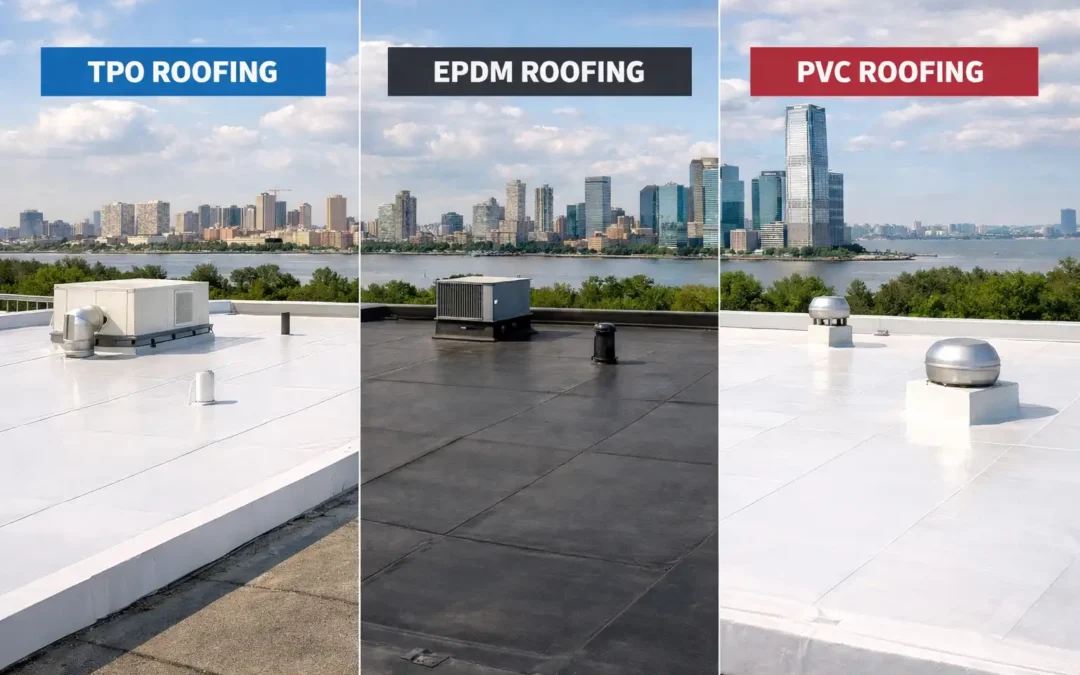
TPO, EPDM, and PVC dominate the commercial roofing market, especially for flat and low-slope buildings. Each system performs well under the right conditions — and poorly under the wrong ones. Understanding how they differ, and how NJ weather impacts them, is critical to making the right long-term decision.
Why Roofing System Choice Matters More in NJ Than Many States
New Jersey roofs deal with a little bit of everything: freezing winters, hot summers, heavy rain, snow loads, freeze-thaw cycles, wind, and humidity. That constant stress exposes weaknesses faster than in more stable climates.
A system that works well in a dry or consistently warm region may fail prematurely here. That’s why system selection in NJ should always be based on:
- Temperature swings
- Drainage behavior
- Building use
- Foot traffic
- Rooftop equipment
- Energy efficiency goals
- Long-term maintenance expectations
The best roof is the one that matches how your building actually functions.
Understanding TPO Roofing in the NJ Commercial Market
TPO (thermoplastic polyolefin) has become the most widely installed commercial roofing system in New Jersey over the last decade — and for good reason.
TPO membranes are heat-welded, creating a continuous waterproof surface when installed correctly. The reflective white surface reduces heat absorption, which is especially valuable during NJ’s humid summers when cooling costs spike.
Where TPO Performs Best
- Warehouses and distribution centers
- Retail plazas
- Office buildings
- Schools and municipal buildings
- Properties focused on energy efficiency
Advantages of TPO
- Reflective surface reduces cooling demand
- Heat-welded seams create strong waterproofing
- Lightweight compared to built-up systems
- Cost-effective over large square footage
- Compatible with tapered insulation and drainage improvements
Where TPO Can Fail
TPO is unforgiving when installed incorrectly. Poor seam welding, rushed prep work, or inexperienced crews can lead to seam failure within a few years. Cold-weather installation without proper controls can also compromise performance.
This is why certification and experience matter so much with TPO systems. The membrane itself is only as good as the installer.
EPDM: A Proven System That Still Has a Place
EPDM (rubber roofing) has been used on commercial buildings for decades. In NJ, it continues to perform well in certain applications — especially where flexibility and cold-weather resilience are priorities.
EPDM remains flexible in freezing temperatures, which helps it resist cracking during winter. It also tolerates building movement well, making it a good choice for older structures.
Where EPDM Makes Sense
- Older commercial buildings
- Properties with complex roof layouts
- Buildings where cold-weather flexibility is critical
- Facilities with limited rooftop foot traffic
Advantages of EPDM
- Excellent cold-weather performance
- Long track record and proven durability
- Resistant to thermal shock
- Easy to repair when issues arise
Limitations of EPDM
Traditional EPDM is black, which absorbs heat. In summer, this increases rooftop temperatures and HVAC load unless a reflective coating is added. Seams are adhered rather than welded, which means long-term seam maintenance is more important.
PVC Roofing: The Premium Option for Specialized Uses
PVC roofing is often chosen for buildings with unique environmental challenges. Its chemical resistance and durability make it ideal for certain NJ commercial applications.
PVC membranes are heat-welded like TPO but offer enhanced resistance to grease, oils, and chemicals — making them popular in food service, manufacturing, and industrial facilities.
Best Uses for PVC
- Restaurants and commercial kitchens
- Manufacturing facilities
- Buildings with grease exhaust
- Facilities with heavy rooftop equipment
Advantages of PVC
- Superior chemical and grease resistance
- Strong welded seams
- High reflectivity
- Long service life when properly installed
Tradeoffs to Consider
PVC typically comes with a higher upfront cost than TPO or EPDM. For buildings that don’t need chemical resistance, that premium may not deliver proportional value.
How Building Use Should Drive Your Roofing Decision
The biggest mistake owners make is choosing a system without considering how the roof is actually used.
Ask these questions:
- How often is the roof accessed?
- Is there heavy HVAC or mechanical equipment?
- Are grease or chemicals present?
- Is energy efficiency a priority?
- Will solar be added later?
A warehouse with minimal foot traffic has different needs than a restaurant with grease exhaust or an office building focused on energy savings.
Installation Quality Matters More Than Material
No roofing system can outperform poor installation. Many failures blamed on materials are actually installation failures.
Certified contractors understand:
- Proper seam welding temperatures
- Cold-weather installation requirements
- Drainage design and insulation layout
- Manufacturer-approved repair methods
Choosing the right system is only half the decision. Choosing the right installer is what determines success.
Long-Term Value vs Short-Term Cost
Upfront price should never be the sole factor. A roof that costs less initially but fails early is far more expensive over time.
The right system:
- Performs reliably through NJ weather cycles
- Supports proper drainage
- Preserves warranty eligibility
- Minimizes emergency repairs
- Reduces energy costs
That’s where experience and planning pay off.
The Smart Way to Decide
The best approach is a building-specific evaluation that looks at structure, usage, drainage, and long-term goals. Roofing systems are not interchangeable — and treating them as such leads to avoidable failures.