Winter is when commercial roofs in New Jersey are pushed to their absolute limits. Snow, ice, freezing rain, temperature swings, and wind all work together to expose weaknesses that may have been developing quietly for months—or even years. By the time a building owner notices water inside, the real damage has often already been done.
One of the most frustrating parts of winter roof leaks is that they rarely tell the full story. The drip you see inside your building is usually not directly below the problem area. Water travels. It follows insulation paths, structural members, and slopes before it finally appears. That’s why so many winter leak “repairs” fail—because the real source was never properly identified.
For NJ commercial property owners, understanding why winter leaks happen is the first step toward preventing them from becoming a recurring issue year after year.
Why Winter Is the Most Dangerous Season for Commercial Roofs in NJ
New Jersey winters are uniquely tough on roofing systems because of how often temperatures fluctuate around freezing. This constant freeze-thaw cycle is brutal on seams, flashings, and penetrations.
Here’s what happens in real life:
Water enters a roof system through a tiny opening—sometimes so small it’s invisible during a dry inspection. During the day, snow melts or rain falls and moisture works its way in. At night, temperatures drop below freezing, and that trapped moisture expands. Expansion widens the opening slightly. The next warm day, more water gets in. The next freeze, the opening grows again.
This cycle repeats dozens of times over a single winter.
Eventually, the membrane fails, insulation becomes saturated, and water makes its way inside the building.
The Most Common Winter Leak Sources on NJ Commercial Roofs
While every building is different, winter leaks tend to come from the same problem areas again and again.
Seams and Membrane Joints
On flat roofing systems like TPO, EPDM, and PVC, seams are critical. Heat-welded or adhered seams that were installed improperly—or that have aged—can separate under thermal stress. Cold temperatures make membranes less flexible, increasing the likelihood of cracking or seam failure.
Flashings and Parapet Walls
Flashings are where roofs meet walls, edges, or equipment. These areas move more than the field of the roof and are often the first to fail in winter. Wind-driven rain and melting snow collect here, especially around parapet caps and termination bars.
Roof Penetrations
HVAC units, exhaust vents, conduit, and piping all require penetrations through the roof membrane. Each penetration is a potential leak point. In winter, seals around these penetrations harden, crack, or pull away from the surface.
Clogged Drains and Scuppers
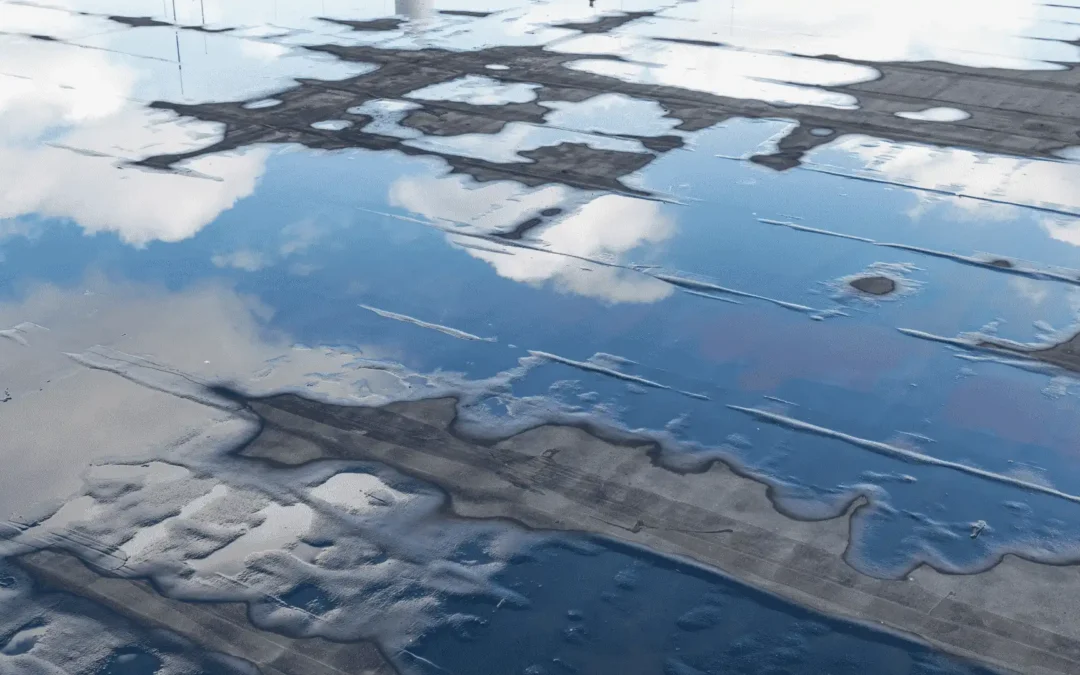
Fall debris that wasn’t fully cleared often freezes in winter. When drains clog, melting snow has nowhere to go. Ponding water forms, freezes, expands, and puts stress on the membrane until it finds a way through.
Saturated Insulation from Past Leaks
Many winter leaks are actually the result of older issues that were never fully corrected. Once insulation becomes wet, it retains moisture and spreads it laterally across the roof system. Winter conditions simply expose the problem.
Why “Quick Patches” Rarely Solve Winter Leak Problems
A common reaction to a winter leak is to apply a surface patch where water is visible. Unfortunately, this approach almost always fails.
Surface patches don’t address:
- Hidden moisture inside the roof assembly
- Water migration paths
- Multiple entry points created by freeze-thaw expansion
In cold weather, many materials don’t bond or cure properly. Adhesives stiffen, coatings fail to set, and temporary fixes crack again once temperatures drop.
This is why winter leak repairs must be approached differently. Proper diagnostics—moisture scanning, infrared imaging, and hands-on inspection—are critical to identifying the real source of the problem.
The Hidden Costs of Winter Roof Leaks
Winter leaks rarely stay contained. Even a small drip can trigger a chain reaction of damage that affects far more than the roof itself.
Interior Damage
Ceiling tiles, drywall, insulation, and structural components absorb moisture quickly. Once water enters these systems, repairs extend far beyond roofing.
Equipment and Inventory Loss
Commercial buildings often house valuable equipment, electronics, or inventory. Water intrusion can shut down operations, damage products, or require costly replacements.
Increased Heating Costs
Wet insulation loses its thermal value. Heating systems must work harder, driving up utility costs during the most expensive energy months.
Mold and Indoor Air Quality Issues
Moisture trapped inside roof assemblies creates ideal conditions for mold growth. This introduces health concerns, tenant complaints, and potential liability.
Why Certified Repairs Matter Most in Winter
Winter is not the season for trial-and-error repairs. Materials must be compatible with cold conditions, and installation methods must follow manufacturer guidelines precisely.
This is where working with a certified commercial roofing contractor makes a real difference. A contractor trained and approved by manufacturers understands:
- Which materials can be safely installed in cold temperatures
- How to prepare surfaces properly in winter
- How to make repairs without voiding existing warranties
Cipollini Roofing approaches winter leak repairs with this long-term mindset—fixing the problem fully, not temporarily.
How NJ Building Owners Can Reduce Winter Leak Risk
While no roof is immune to winter stress, there are steps owners can take to reduce risk dramatically.
- Schedule inspections before winter fully sets in
- Ensure all drains and scuppers are clear and functioning
- Address minor seam or flashing issues immediately
- Avoid allowing snow or ice to accumulate unnecessarily
- Keep documentation of inspections and repairs
The goal is simple: stop water from entering the system in the first place, and eliminate conditions that allow moisture to spread.
Why Winter Leaks Keep Reappearing on the Same Buildings
When leaks return year after year, it’s usually because the original repair addressed symptoms instead of causes. Without moisture mapping, drainage correction, or seam reinforcement, the roof remains vulnerable.
A winter leak is rarely “just bad luck.” It’s almost always a warning sign that the roof system needs deeper attention.
The Long-Term Perspective
Winter doesn’t destroy good roofs—it exposes weak ones. Buildings with well-maintained membranes, proper drainage, and documented repairs typically make it through NJ winters without incident.
Those that don’t often end up facing emergency repairs, insurance disputes, and premature roof replacement.
Addressing winter leaks properly isn’t just about stopping water today. It’s about protecting the entire building asset for years to come.